Lonar Crater
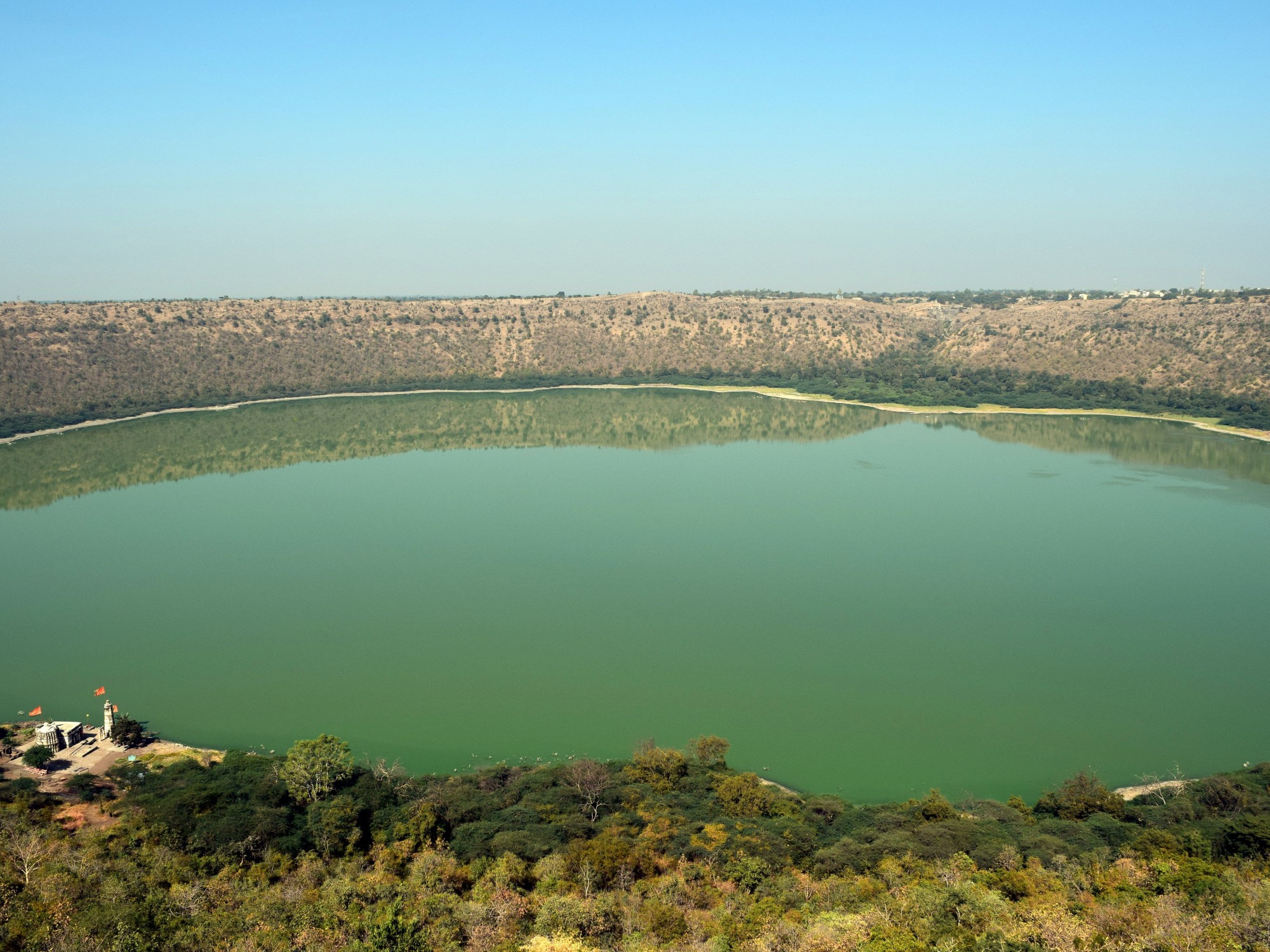
Located in the Buldhana district of Maharashtra ,Lonar Lake is the only lake in India that is created out of hypervelocity meteorite impact. It is the third largest crater lake in the world. It is also known as Lonar Crater. It is National Geo-heritage Monument.
The Diameter of this Lake is 3,900 ft. and is about 449 ft. below the crater rim. The meteor crater rim is about 5,900 ft. in diameter. Lonar Lake is surrounded by series of small hills, due to which it has an oval shape. The water of Lake contains various sodas and salts. In dry whether, because of evaporation leading to the concentration of salts and sodas. Additionally there is a well of fresh water at southern side of Lake’s edge and Purna and Penganga, rivers contribute to the water in the lake.
Things to do here :
There is a small sanctuary spread over only 3.8 sq.km surrounds the famous Lonar Crater.
At the North side of Lonar Lake there is Amber Lake; which is also known as Chhota (little) Lonar. This is a small circular depression lake at a distance of around 700m north from the main lake.It is outcome of a splinter of the meteor that hit the ground to also make a crater. The water from Ambar lake is being drained by local farmers.
There is a Lord Hanuman temple near this lake, with the idol made of rock believed to be highly magnetic.
Near the lake, there is Hanuman temple and it has an idol made of rock that is believed to possess magnetic properties. This adds to the mystique and significance of the lake for both scientific and religious reasons. The water from the lake was traditionally considered sacred and used for religious purposes in the nearby Hanuman temple.
Over the years, due to the surrounding agricultural activities, the water from Lonar Lake has been drained by local farmers for irrigation purposes, leading to some changes in its ecosystem and water levels.
Lonar Lake continues to attract tourists, researchers, and enthusiasts alike, offering a rare opportunity to witness a natural wonder that holds both geological and cultural importance. If you plan to visit, make sure to respect the environmental and cultural significance of the area and adhere to any guidelines set forth by local authorities.
As a result of the meteorite impact, the lake’s water is slightly alkaline and has high salinity levels, making it a unique ecosystem with microorganisms and plant life adapted to such conditions. The water from the lake was traditionally considered sacred and used for religious purposes in the nearby Hanuman temple.
The Hanuman temple you mentioned is located near the lake, and it has an idol made of rock that is believed to possess magnetic properties. This adds to the mystique and significance of the lake for both scientific and religious reasons.
Over the years, due to the surrounding agricultural activities, the water from Lonar Lake has been drained by local farmers for irrigation purposes, leading to some changes in its ecosystem and water levels.
Lonar Lake continues to attract tourists, researchers, and enthusiasts alike, offering a rare opportunity to witness a natural wonder that holds both geological and cultural importance. If you plan to visit, make sure to respect the environmental and cultural significance of the area and adhere to any guidelines set forth by local authorities.